Partial lunar eclipse on July 6 2028 (Switzerland)
The Moon information shown here applies to Zurich, Switzerland on Thursday, July 6, 2028. (Local time Europe/Zurich)
| Moonrise to moonset | 16h28m |
| Moonrise | 21:26 |
| Moonset | 04:58 |
| Distance to the center of the Sun | 152,098,260 km |
| Distance to the center of Earth | 391,063 km |
| Moon ilumination (at midnight) | 99.3% |
| Lunar phase | waxing |
| Current zodiac sign the Moon | Capricorn ♑ |
| Moon age (days past new moon) | 14 |
According to international time UTC, a lunar eclipse will occur on July 6, 2028 which will be visible in some parts of the world. The following shows the cities in Switzerland from which the eclipse could be visible (note that the following is a short list of some of the main cities, the eclipse may be visible from other cities not listed here). The date and local time of the event shown below.
| City | Eclipse visible? | Phase |
|---|---|---|
| Zurich | Yes | Penumbral |
| Aargau | Yes | Penumbral |
| Appenzell Ausserrhoden | Yes | Penumbral |
| Appenzell Innerrhoden | Yes | Penumbral |
| Basel-Landschaft | Yes | Penumbral |
| Basel-Stadt | Yes | Penumbral |
| Bern | Yes | Penumbral |
| Fribourg | Yes | Penumbral |
| Genève | Yes | Penumbral |
| Glarus | Yes | Penumbral |
| Graubünden | Yes | Partial, Penumbral |
| Jura | Yes | Penumbral |
| Luzern | Yes | Penumbral |
| Neuchâtel | Yes | Penumbral |
| Nidwalden | Yes | Penumbral |
| Obwalden | Yes | Penumbral |
| Sankt Gallen | Yes | Penumbral |
| Schaffhausen | Yes | Penumbral |
| Schwyz | Yes | Penumbral |
| Solothurn | Yes | Penumbral |
| Thurgau | Yes | Penumbral |
| Ticino | Yes | Partial, Penumbral |
| Uri | Yes | Penumbral |
| Valais | Yes | Penumbral |
| Vaud | Yes | Penumbral |
| Zug | Yes | Penumbral |
Information about this eclipse
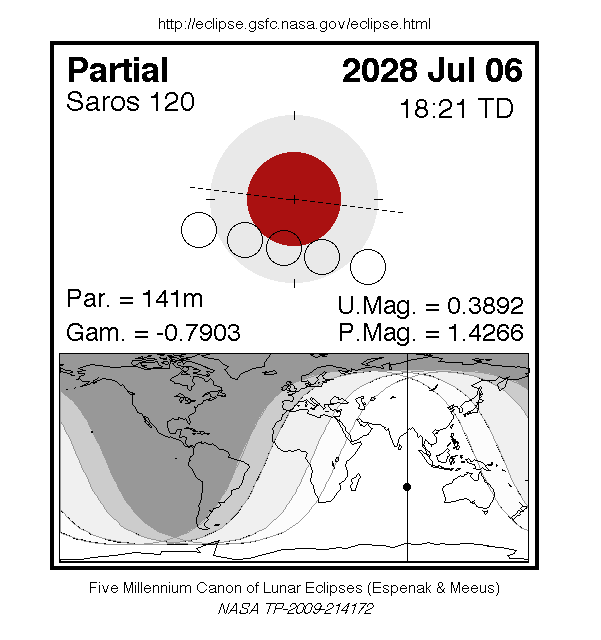 This image shows the global map with two regions: the shaded region where you can not see the lunar eclipse, and the blank region, where it can be seen. The image details the type of eclipse, the magnitude of the penumbra and umbra, Saros series to which this eclipse belongs, among other data. The date and time displayed in this image are international date and time, therefore, they might not apply to your country. However, to know the date and exact time of partial lunar eclipse in your country, you can see the table below. (Click on the image to enlarge it).
Eclipse schedule in Switzerland
The following table shows the schedule and phases of the partial lunar eclipse of July 6, 2028 in Switzerland. For each city we have assigned a time zone which is very precise and it takes into account Daylight Saving Time (if applicable).
Moon alt.: Excellent Good Low Too low
| City | Details | ||||||||||||||||
|---|---|---|---|---|---|---|---|---|---|---|---|---|---|---|---|---|---|
| Event date | Pen. Mag. | Umb. Mag. | Penumbral eclipse begins | Moon alt. | Partial eclipse begins | Umbral eclipse begins | Max. eclipse begins | Moon alt. | Umbral eclipse ends | Partial eclipse ends | Penumbral eclipse ends | Moon alt. | |||||
| Zurich (UTC 2) | 2028-07-06 | 142.7% | 38.9% | 17:44 | -35 | 19:09 | - | 20:20 | -10 | - | 21:30 | 22:55 | 10 | ||||
| Aargau (UTC 2) | 2028-07-06 | 142.7% | 38.9% | 17:44 | -35 | 19:09 | - | 20:20 | -10 | - | 21:30 | 22:55 | 10 | ||||
| Appenzell Ausserrhoden (UTC 2) | 2028-07-06 | 142.7% | 38.9% | 17:44 | -34 | 19:09 | - | 20:20 | -10 | - | 21:30 | 22:55 | 10 | ||||
| Appenzell Innerrhoden (UTC 2) | 2028-07-06 | 142.7% | 38.9% | 17:44 | -34 | 19:09 | - | 20:20 | -10 | - | 21:30 | 22:55 | 10 | ||||
| Basel-Landschaft (UTC 2) | 2028-07-06 | 142.7% | 38.9% | 17:44 | -35 | 19:09 | - | 20:20 | -11 | - | 21:30 | 22:55 | 9 | ||||
| Basel-Stadt (UTC 2) | 2028-07-06 | 142.7% | 38.9% | 17:44 | -35 | 19:09 | - | 20:20 | -11 | - | 21:30 | 22:55 | 9 | ||||
| Bern (UTC 2) | 2028-07-06 | 142.7% | 38.9% | 17:44 | -36 | 19:09 | - | 20:20 | -11 | - | 21:30 | 22:55 | 10 | ||||
| Fribourg (UTC 2) | 2028-07-06 | 142.7% | 38.9% | 17:44 | -36 | 19:09 | - | 20:20 | -11 | - | 21:30 | 22:55 | 10 | ||||
| Genève (UTC 2) | 2028-07-06 | 142.7% | 38.9% | 17:44 | -37 | 19:09 | - | 20:20 | -11 | - | 21:30 | 22:55 | 10 | ||||
| Glarus (UTC 2) | 2028-07-06 | 142.7% | 38.9% | 17:44 | -35 | 19:09 | - | 20:20 | -10 | - | 21:30 | 22:55 | 10 | ||||
| Graubünden (UTC 2) | 2028-07-06 | 142.7% | 38.9% | 17:44 | -34 | 19:09 | - | 20:20 | -9 | - | 21:30 | 22:55 | 11 | ||||
| Jura (UTC 2) | 2028-07-06 | 142.7% | 38.9% | 17:44 | -36 | 19:09 | - | 20:20 | -11 | - | 21:30 | 22:55 | 9 | ||||
| Luzern (UTC 2) | 2028-07-06 | 142.7% | 38.9% | 17:44 | -35 | 19:09 | - | 20:20 | -10 | - | 21:30 | 22:55 | 10 | ||||
| Neuchâtel (UTC 2) | 2028-07-06 | 142.7% | 38.9% | 17:44 | -36 | 19:09 | - | 20:20 | -11 | - | 21:30 | 22:55 | 9 | ||||
| Nidwalden (UTC 2) | 2028-07-06 | 142.7% | 38.9% | 17:44 | -35 | 19:09 | - | 20:20 | -10 | - | 21:30 | 22:55 | 10 | ||||
| Obwalden (UTC 2) | 2028-07-06 | 142.7% | 38.9% | 17:44 | -35 | 19:09 | - | 20:20 | -10 | - | 21:30 | 22:55 | 10 | ||||
| Sankt Gallen (UTC 2) | 2028-07-06 | 142.7% | 38.9% | 17:44 | -34 | 19:09 | - | 20:20 | -10 | - | 21:30 | 22:55 | 10 | ||||
| Schaffhausen (UTC 2) | 2028-07-06 | 142.7% | 38.9% | 17:44 | -35 | 19:09 | - | 20:20 | -10 | - | 21:30 | 22:55 | 10 | ||||
| Schwyz (UTC 2) | 2028-07-06 | 142.7% | 38.9% | 17:44 | -35 | 19:09 | - | 20:20 | -10 | - | 21:30 | 22:55 | 10 | ||||
| Solothurn (UTC 2) | 2028-07-06 | 142.7% | 38.9% | 17:44 | -36 | 19:09 | - | 20:20 | -11 | - | 21:30 | 22:55 | 10 | ||||
| Thurgau (UTC 2) | 2028-07-06 | 142.7% | 38.9% | 17:44 | -34 | 19:09 | - | 20:20 | -10 | - | 21:30 | 22:55 | 10 | ||||
| Ticino (UTC 2) | 2028-07-06 | 142.7% | 38.9% | 17:44 | -35 | 19:09 | - | 20:20 | -10 | - | 21:30 | 22:55 | 11 | ||||
| Uri (UTC 2) | 2028-07-06 | 142.7% | 38.9% | 17:44 | -35 | 19:09 | - | 20:20 | -10 | - | 21:30 | 22:55 | 10 | ||||
| Valais (UTC 2) | 2028-07-06 | 142.7% | 38.9% | 17:44 | -36 | 19:09 | - | 20:20 | -10 | - | 21:30 | 22:55 | 10 | ||||
| Vaud (UTC 2) | 2028-07-06 | 142.7% | 38.9% | 17:44 | -36 | 19:09 | - | 20:20 | -11 | - | 21:30 | 22:55 | 10 | ||||
| Zug (UTC 2) | 2028-07-06 | 142.7% | 38.9% | 17:44 | -35 | 19:09 | - | 20:20 | -10 | - | 21:30 | 22:55 | 10 | ||||
You can read the table above as follows: On July 6, 2028 in Zurich, Europe/Zurich (UTC 2), an partial lunar eclipse will start at 17:44, the maximum eclipse will occur at 20:20 when the Moon reaches an altitud of -10°; this event will come to an end at 22:55 and will have a penumbral magnitud of 1.427 (this is the fraction of the Moon obscured by the entrance to The Earth's penumbra) and an umbral magnitud of 0.389 (fraction of the Moon obscured by the umbra of The Earth).
We must take into account the altitude of the moon, for example, in Zurich, due to the low altitude of the Moon (-10 degrees) this lunar eclipse will not be very obvious.
Source: Eclipse Predictions by Fred Espenak and Chris O'Byrne (NASA's GSFC).